The Liberal Arts
The arts of freedom
Traditionally, Western civilisation has viewed the study of the liberal arts as essential in the formation of a whole person, the character as well as the intellect.
The ancient Greeks distinguished between different kinds of knowledge. Some arts were servile: learned for the sake of producing something, and valuable because of what they made. Others they called liberal, the arts of a free person, learned for their own sake, because they perfect the one who studies them.
Seven were handed down. The trivium of grammar, rhetoric and logic taught a student to read carefully, speak truthfully and reason validly. The quadrivium of arithmetic, geometry, music and astronomy taught the student to see order, proportion and harmony in the world. Together they were considered the necessary formation of a citizen who would be free in more than name.
Apprentices of virtue
This formation was never merely intellectual. Through the liberal arts, students became apprentices of virtue: they practised patience with a difficult text, honesty in argument, humility before a better answer, and courage in following an argument to a conclusion they had not expected. Character was not a subject alongside the others; it was the fruit of studying them well.
The world, in all its diversity, is eager to be guided towards the great values of mankind, truth, goodness and beauty; now more than ever.
Congregation for Catholic Education, 2014
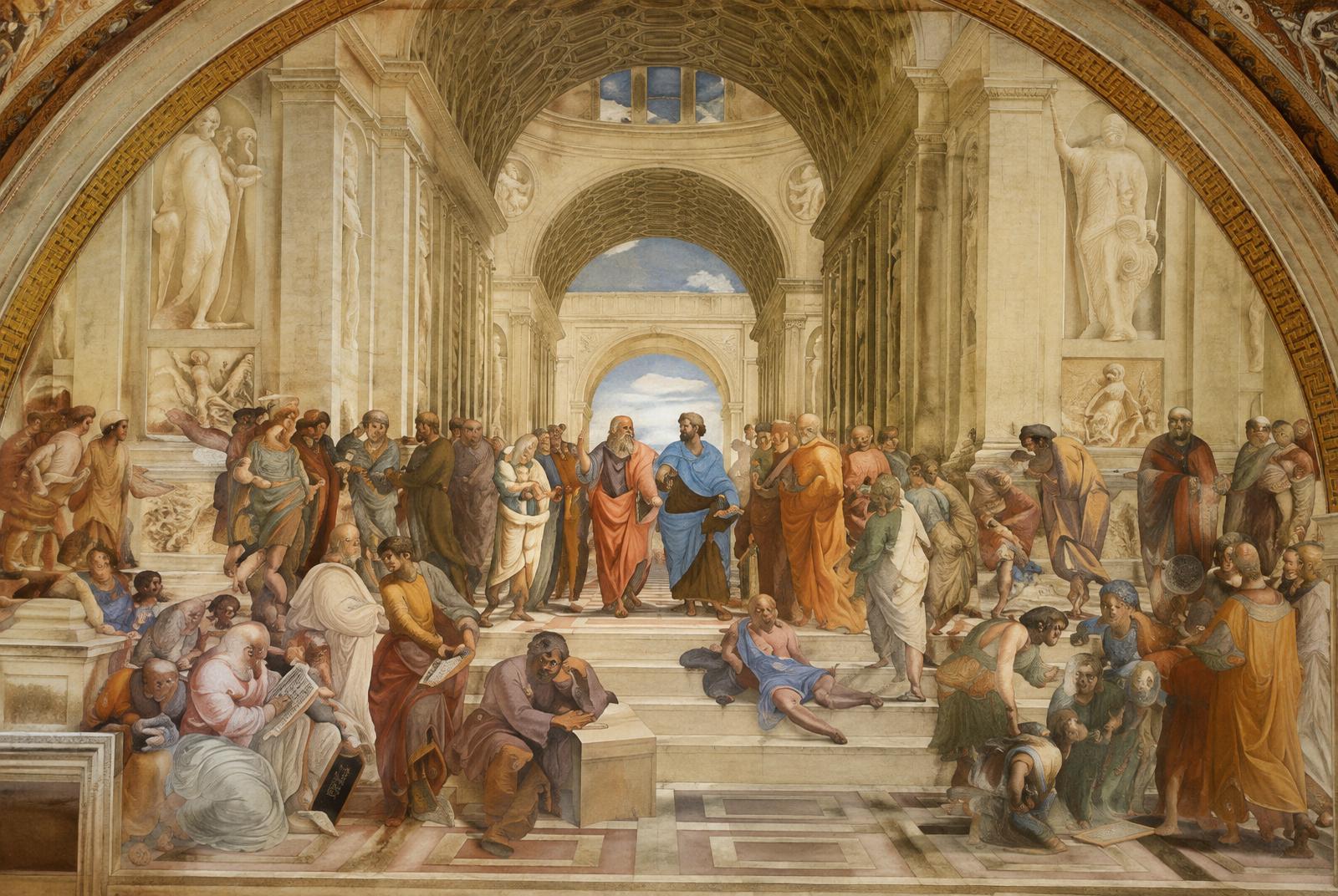
Why it matters now
A liberal arts education builds the foundation of an entire life. It gives a student the critical analysis and holistic thinking needed for a purposeful vocation, and a robust basis for further study, but it does more than that. The study of the liberal arts always leads a student to the deep questions of life, to those metaphysical questions which deal with the fundamental nature of existence. It inclines the mind to that in life which is truly meaningful.
Our present moment is loud, fast and impatient with anything that takes time. That is precisely why reading Plato slowly, with other people, in a room, is not nostalgia. It is training for a kind of attention that almost nothing else now teaches.
But is it useful?
It is a fair question, and it deserves a straight answer. As routine technical work is increasingly automated, the things machines cannot do become the valuable things: thinking clearly, arguing honestly, writing well, and judging wisely in situations nobody has seen before. Those are exactly the habits the liberal arts train. Liberal arts graduates change careers more often than most, not from indecision, but because a broad formation lets them adapt and lead over a forty-year working life.
Nor is this a choice between head and hands. That split is modern, and we reject it. The same civilisation that built the cathedrals built the universities, and some of the most interesting experiments in education today, like the College of St Joseph the Worker in America, combine a liberal arts degree with a skilled trade, so students graduate formed in mind and free of crushing debt. Intellectual life and practical work belong together.
And there is a deeper answer. The word liberal comes from liber, free. These arts are free precisely from utility: they are the highest disciplines because they take up the questions that technical training never touches, what is true, what is just, what a life is for. A person formed in them is not a detour away from a career; he or she is becoming the kind of person capable of a great and purposeful one.
What we do about it
The St Thomas More Trust exists to make this education genuinely available in New Zealand: free course material and small reading groups through PHIL101, week-long intensives for school students, public lectures and seminars with visiting scholars, smaller evenings for school leavers weighing up whether to study, and grants that help young New Zealanders study at institutions where this tradition is alive.
Questions